
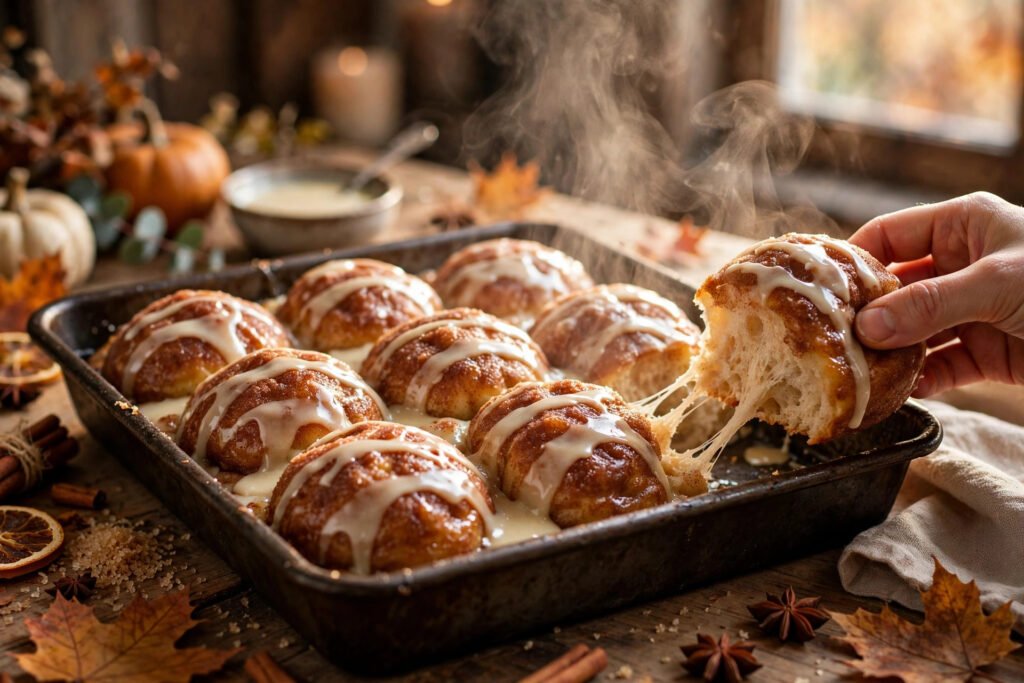
Take a proper sourdough focaccia dough, portion it into balls, dunk each one in melted butter, roll it in cinnamon sugar, and pack the whole lot into a pan. What comes out is somewhere between focaccia, monkey bread, and a cinnamon roll that decided to relax: crisp sugared edges, soft centers, and pieces that tear away in your hand. A pan of this on the counter does not survive the day.
The sourdough is not a gimmick here. A slow ferment gives the dough enough flavor to stand up to all that butter and sugar, so the finished pan tastes balanced instead of just sweet. This is the weekend bake people photograph, send to their group chat, and then ask you for the recipe. In that order.
The formula
Dough (baker’s percentages against the flour)
| Ingredient | Amount | Baker’s % |
|---|---|---|
| Bread flour | 500 g | 100% |
| Water | 375 g | 75% |
| Active sourdough starter, at peak | 100 g | 20% |
| Honey or sugar | 20 g | 4% |
| Fine sea salt | 10 g | 2% |
| Olive oil (in the dough) | 25 g | 5% |
Coating and glaze
| Ingredient | Amount |
|---|---|
| Butter, melted (for dunking) | 60 g |
| Granulated sugar | 150 g |
| Cinnamon | 2 tbsp |
| Powdered sugar | 120 g |
| Milk | 25–30 g |
| Vanilla extract | 1 tsp |
| Fine sea salt | a pinch |
Yield: one 9×13-inch pan, 24 pieces. Extra olive oil for the pan.
Schedule
Same-day (start by 9 am): mix in the morning, bulk ferment to early afternoon, shape and coat, final proof about 2 hours, bake by dinner.
Overnight (better flavor, less day-of work): mix and bulk ferment the dough in the evening, refrigerate it overnight in the bowl, then shape cold the next day. Cold dough is easier to portion and coat. Add 30 minutes to the final proof.
Method
1. Mix and bulk ferment (4–5 hours)
Mix everything except the coating and glaze into a shaggy dough. Rest 30 minutes, then give it 3–4 sets of stretch-and-folds over the first 2 hours. Focaccia dough is wet, so work with a wet hand and confidence. Bulk is done when the dough has risen about 60–75%, feels airy, and jiggles as one mass. It does not need to double; it gets a second rise in the pan.
2. Portion
Tip the dough onto a lightly oiled surface (oil, not flour; you want the balls to seal). Divide into 24 pieces of about 38 g each. A scale helps, but eyeballing golf balls is honestly fine for this. Roll each piece into a rough ball.
3. Dunk and roll
Set up a production line: melted butter in one shallow bowl, cinnamon sugar in another. Dunk each ball in butter, let the excess drip for two seconds, then roll it thoroughly in cinnamon sugar. Pack the balls into a well-oiled 9×13 pan in a snug single layer. They should be touching or close to it. Sprinkle any leftover cinnamon sugar over the top, because of course.
4. Final proof (1½–2 hours)
Cover and proof until the balls have puffed into each other and the pan looks full and pillowy, with no gaps. Underproofed balls bake up dense and separate; properly proofed ones fuse into a single tear-apart sheet.
5. Bake
Bake at 190°C (375°F) for 28–33 minutes, until the top is deep golden, the sugar at the edges has gone glossy and just dark, and the center piece reaches about 93°C (200°F). The sugar near the pan edges will caramelize hard. That is the best part, not a mistake.
6. Glaze while warm
Wait 5 minutes, whisk the glaze ingredients to a pourable ribbon, and drizzle it over the warm pan. Serve warm, in the pan, with no utensils provided. People will understand what to do.
Troubleshooting
The pieces baked up separate and dry. Underproofed, most likely, or the pan was too big for the dough amount. The balls need to proof into each other so they steam together.
The sugar burned. Your oven runs hot, or the pan sat high. Bake on a lower rack, and if the top is dark at 22 minutes with a pale center, tent with foil for the remaining time.
Butter pooled in the bottom. Too much butter per ball. Dunk and drip; do not soak. A little pooling is fine and fries the bottoms pleasantly, but a visible layer means cut back next time.
The centers are doughy. The pan was crowded into a cold oven corner, or the proof was short and the bake rushed. Check the center piece with a thermometer, and give it 3–5 more minutes tented.
It is sweet but flat-tasting. The dough was rushed. This pan needs the ferment for depth. If your starter was sluggish, the overnight version fixes it by giving the dough time.
Variations
- Pumpkin spice version: swap the cinnamon in the coating for 2 tablespoons of pumpkin pie spice, and add ½ teaspoon to the glaze. This is the October edition.
- Apple butter centers: press a teaspoon of apple butter into the middle of half the balls before rolling them closed. Mark which corner of the pan has them, or don’t, and let it be a lottery.
- Brown butter glaze: brown the butter for the glaze instead of using milk alone. Deeper, nuttier, worth the extra pan.
Storage
Best the day it is baked, ideally within hours. Leftovers keep 1–2 days covered at room temperature and come back well with 8 minutes in a 150°C (300°F) oven. The full pan freezes, wrapped tightly, for up to a month; thaw overnight and warm before serving.
FAQ
Can I use discard instead of active starter? For this one, no. The dough balls need a real rise to fuse and puff. Fresh discard (under 2 days old) plus ½ teaspoon of instant yeast will work in a pinch, but active starter is the recipe.
Can I make it in a bundt pan like classic monkey bread? Yes. Oil it very well, layer the balls in two rings, and add 5 minutes to the bake. Unmold after a 10-minute rest, no longer, or the sugar will glue itself to the pan.
Do I have to glaze it? No. The glaze is the difference between “cinnamon focaccia” and “dessert.” Choose your own adventure.
Can I reduce the sugar? You can cut the coating sugar to 100 g and it will still read as a treat. Below that, the caramel edges disappear and it becomes a different bake.
First time shaping a wet dough? The Gear & Technique section covers handling high-hydration dough without the swearing. More sweet sourdough, including the pumpkin loaf, lives in Sweet Baking.