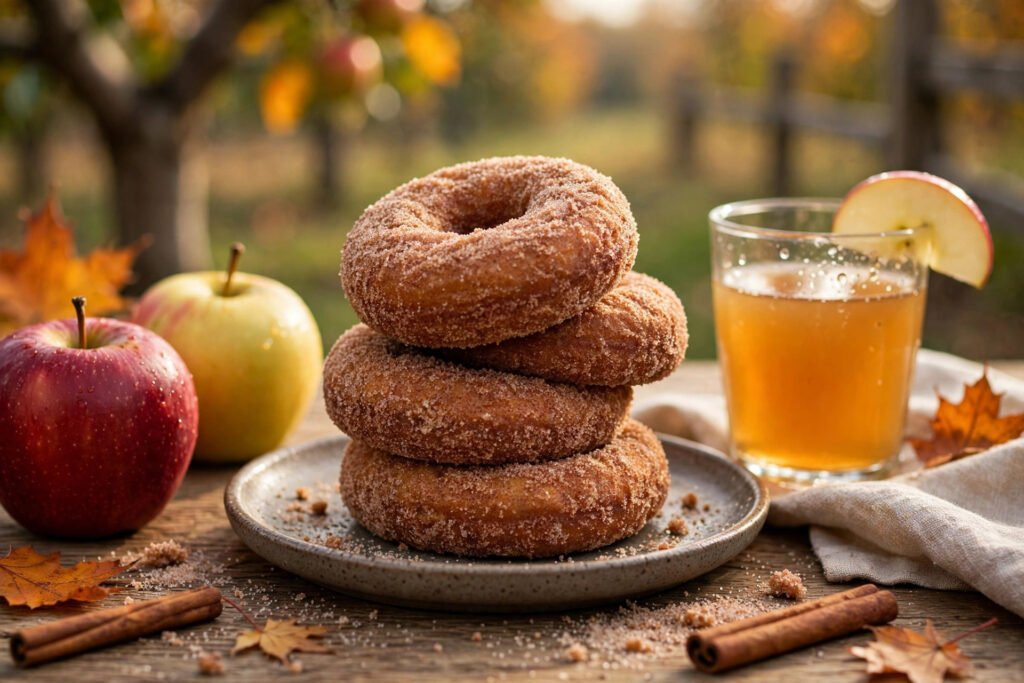
Here is the problem with most baked apple cider donuts: they taste like vanilla cake that once stood near an apple. The cider goes into the batter at drinking strength, most of it is water, and the oven takes what little flavor there was. The fix takes ten extra minutes and changes everything: boil the cider down to a third of its volume first. Now it is a concentrate, the batter is built around it, and the donuts come out tasting like the ones from the orchard stand.
These are baked in a standard donut pan, no frying, no yeast, no waiting around. Batter to cinnamon sugar in about half an hour.
Ingredients
The donuts
| Ingredient | Amount |
|---|---|
| Apple cider (the cloudy kind, not juice) | 360 g (1½ cups), reduced to 120 g (½ cup) |
| All-purpose flour | 250 g |
| Baking powder | 1½ tsp |
| Baking soda | ¼ tsp |
| Fine sea salt | ½ tsp |
| Cinnamon | 1½ tsp |
| Nutmeg | ¼ tsp |
| Brown sugar | 100 g |
| Granulated sugar | 50 g |
| Egg, room temperature | 1 large |
| Butter, melted | 55 g |
| Milk | 60 g |
| Vanilla extract | 1 tsp |
The coating
| Ingredient | Amount |
|---|---|
| Granulated sugar | 100 g |
| Cinnamon | 1½ tsp |
| Butter, melted | 30 g |
Yield: 12 donuts. You need a standard 6- or 12-cavity donut pan.
Method
1. Reduce the cider (10–12 minutes)
Pour the cider into a small saucepan and boil it, uncovered, until it reduces to about 120 g (½ cup). It will darken and smell like concentrated autumn. Measure it after reducing, not before; pans and stoves vary. If you overshoot and land under 100 g, top it back up with a splash of fresh cider. Set aside to cool for a few minutes. This step can be done days ahead and kept in the fridge, which makes the morning-of bake genuinely fast.
2. Heat the oven, prep the pan
Oven to 175°C (350°F). Grease the donut pan thoroughly, including the center posts. Baked donuts stick exactly where you got lazy with the butter, and a torn donut is a sad donut.
3. Mix the batter
Whisk the flour, baking powder, baking soda, salt, cinnamon, and nutmeg in a large bowl. In a second bowl, whisk both sugars, the egg, melted butter, milk, vanilla, and the cooled reduced cider until smooth. Pour the wet into the dry and fold just until combined, about 15 strokes. The batter will be thick, like muffin batter. A few small lumps are fine; a smooth, worked batter makes rubbery donuts.
4. Fill the pan
Spoon the batter into a piping bag or a zip bag with a corner snipped, and pipe a ring into each cavity, filling about two-thirds. Piping sounds fussy and is actually the fastest, cleanest way to fill a donut pan. Wipe any drips off the center posts so the holes bake open.
5. Bake (10–12 minutes)
Bake until the donuts spring back when pressed lightly and a toothpick comes out clean. They will be pale gold on top; the bottoms (which become the tops when you flip them) will be a shade deeper. Do not chase color by baking longer, or they dry out. This is a softness game.
6. Coat while warm
Rest 5 minutes in the pan, then turn the donuts out onto a rack. Brush each one lightly all over with melted butter, then toss it in the cinnamon sugar until coated. Work warm, not hot: straight from the oven, the sugar melts into syrup; fully cooled, it will not stick. The five-minute rest is the sweet spot.
Troubleshooting
Bland, just sweet cake. The cider was not reduced enough, or apple juice was used instead of cider. Cloudy fresh cider, reduced by two-thirds, is the entire recipe. Also check your cinnamon is not from 2019.
Rubbery, tough donuts. Overmixed batter. Fold to combine and stop, even if it looks slightly lumpy.
Donuts stuck in the pan. Under-greased, or removed too early or too late. Grease every surface, rest 5 minutes, then loosen the edges with a thin spatula before turning out.
The holes closed up. Cavities were overfilled. Two-thirds full, and wipe the posts clean.
Sugar coating slid off. The donuts were too hot when coated (it melts) or the butter layer was too heavy. A thin brush of butter is glue; a dunk is a slip-and-slide.
Variations
- Maple glaze instead: skip the cinnamon sugar, dip the tops in a glaze of 120 g powdered sugar, 30 g maple syrup, and a splash of milk. Orchard stand energy, different direction.
- Sourdough discard version: replace the milk with 60 g of discard (under a week old) for a gentle tang that plays well with apple. If you bake with us regularly, you have a jar in the fridge. You know you do.
- Spiced sugar: add ¼ teaspoon of cardamom or a pinch of cloves to the coating sugar for a warmer finish.
Storage
Cinnamon sugar donuts are best within a few hours, while the coating is still crisp. They keep 2 days in an airtight container at room temperature, though the sugar will soften; 10 seconds in the microwave brings them most of the way back. Freeze uncoated donuts for up to a month, then thaw, warm, butter, and coat fresh.
FAQ
Can I use apple juice? You can, and you will be disappointed. Juice is filtered and sweeter but flatter. If juice is all you have, reduce it the same way and add ½ teaspoon of lemon juice to the batter to fake some of the cider’s bite.
No donut pan. Now what? Bake the batter in a muffin tin, 14–16 minutes, and call them apple cider donut muffins. Same coating. Nobody will object.
Can I fry these? No, this batter is built for baking and is too loose to fry. For fried donuts you want a yeasted dough, which is a different (also excellent) project.
Why is there both baking powder and soda? The soda reacts with the acidic cider for lift, and the powder carries the rest. Together they give a soft, even crumb without a chemical aftertaste. Use both, in these amounts.
More fall baking in Sweet Baking, including the pumpkin loaf. And if your donut pan is still in the packaging from last year, the Gear & Technique section is a judgment-free zone.