
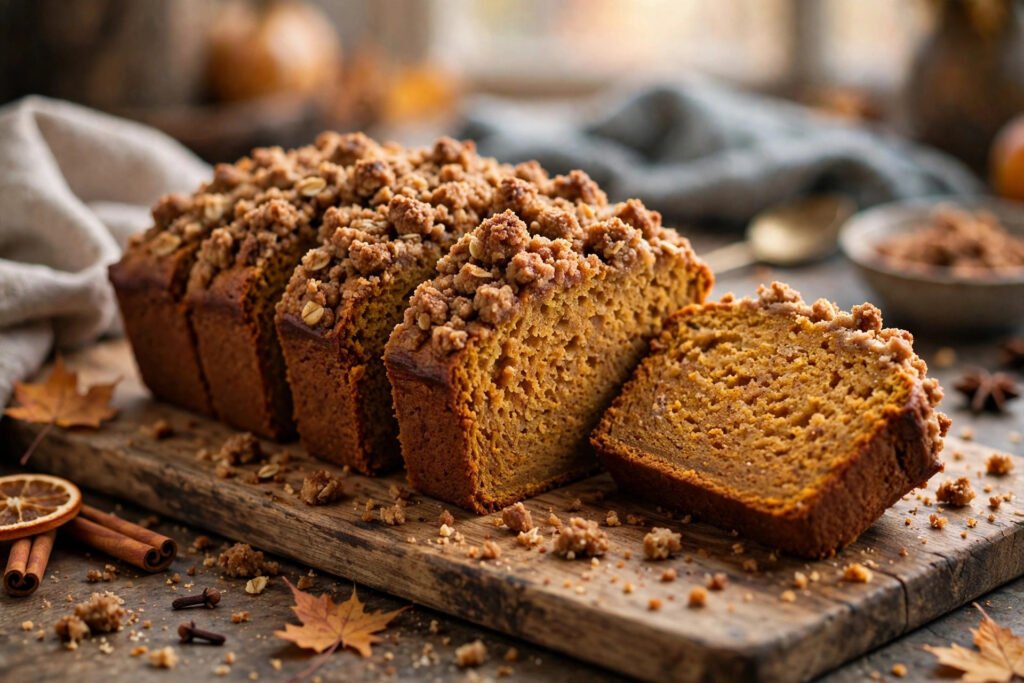
Every sourdough baker ends up with a jar of discard in the fridge and a low-level guilt about it. This loaf is the answer in October: one bowl, fifteen minutes of mixing, and a full 200 grams of discard disappears into a spiced pumpkin bread with a streusel top that stays crunchy after baking.
The discard does two real jobs here. It replaces some of the flour and liquid, and its mild acidity keeps the crumb soft for days, the same reason buttermilk works in quick breads. It does not make the loaf taste sour. Use discard that is less than a week old and this reads as a classic pumpkin bread, just a better-keeping one.
Ingredients
The loaf
| Ingredient | Amount |
|---|---|
| All-purpose flour | 240 g |
| Baking powder | 2 tsp |
| Baking soda | ½ tsp |
| Fine sea salt | 4 g (¾ tsp) |
| Cinnamon | 2 tsp |
| Ground ginger | ½ tsp |
| Nutmeg | ¼ tsp |
| Cloves | a pinch |
| Pumpkin puree (plain, not pie filling) | 425 g (1 standard can) |
| Sourdough discard, stirred | 200 g (about ¾ cup + 1 tbsp) |
| Brown sugar, packed | 220 g |
| Eggs, room temperature | 2 large (about 100 g) |
| Melted butter or neutral oil | 113 g |
| Vanilla extract | 2 tsp |
The streusel
| Ingredient | Amount |
|---|---|
| All-purpose flour | 60 g |
| Brown sugar | 55 g |
| Cinnamon | 1 tsp |
| Cold butter, cubed | 45 g |
| Fine sea salt | a pinch |
| Chopped pecans (optional) | 40 g |
Yield: one 9×5-inch loaf, about 12 slices.
A note on the discard
Stir the jar before you measure. If a dark liquid layer (hooch) is sitting on top, stir it in for a tangier loaf or pour it off for a milder one. For a sweet bread like this, discard older than a week starts to taste sharp rather than pleasant. If yours has been in the fridge since September, feed your starter once and use the fresh discard from that feeding instead. Pink or orange streaks or any fuzz means the jar is done. Throw it out and start a new one; no loaf is worth it.
Method
1. Heat the oven and make the streusel
Oven to 175°C (350°F). Grease a 9×5-inch loaf pan and line it with a parchment sling so the loaf lifts out cleanly.
Rub the streusel ingredients together with your fingers until you have pea-sized crumbs, then put the bowl in the fridge. Cold streusel stays chunky in the oven. Warm streusel melts into a glaze, which is a different (sadder) thing.
2. Mix the dry
Whisk the flour, baking powder, baking soda, salt, and spices in a large bowl. Whisking is not a formality here: baking soda that lands in a clump leaves bitter spots and soapy streaks.
3. Mix the wet
In a second bowl, whisk the pumpkin puree, discard, brown sugar, eggs, melted butter, and vanilla until smooth and uniform. It will look like a lot of wet for the flour. It is, and it works out.
4. Combine, briefly
Pour the wet into the dry and fold with a spatula just until the last streak of flour disappears, about 20 strokes. Quick breads go tough and tunnelled when they are overmixed, because you are building gluten you do not want. Lumpy is fine. Smooth and glossy is too far.
Scrape into the pan, smooth the top, and scatter the cold streusel over the whole surface, pressing it very lightly so it sticks.
5. Bake
Bake 55–65 minutes. The loaf is done when a skewer in the center comes out with a few moist crumbs (not wet batter), and the center reads about 93°C (200°F). If the streusel is browning faster than the loaf is baking, tent loosely with foil at the 40-minute mark.
6. Cool, properly
Cool in the pan 20 minutes, then lift out and cool on a rack for at least 1 hour before slicing. Pumpkin loaves cut hot will smear and turn gummy in the middle even when they are perfectly baked. This is the rule people break most, and then blame the recipe.
Troubleshooting
The center is gummy or wet. Underbaked, or sliced hot, or both. The skewer test plus a full cool-down fixes nearly every case. If your oven runs cool, this loaf needs the full 65 minutes.
The loaf sank in the middle. Usually overmixing, tired baking powder (it loses strength after about 6 months open), or the oven door opened in the first 30 minutes while the structure was still setting.
It tastes faintly sour. Your discard was old. For sweet bakes, keep discard under a week old, or freshen it with one feeding cycle first.
The streusel vanished into the top. It went in warm, or it was rubbed too fine. Keep the crumbs pea-sized and fridge-cold, and get the pan into the oven promptly.
The bottom is soggy. The loaf sat in the pan too long after baking and steamed itself. Twenty minutes, out it comes.
Variations
- Chocolate chip: fold in 120 g of dark chocolate chips with the last few strokes. Pumpkin and dark chocolate are better together than they sound.
- Cream cheese ribbon: beat 115 g cream cheese with 25 g sugar and 1 egg yolk, dollop over half the batter, cover with the rest, swirl once with a knife. Once. More swirling just mixes it in.
- Muffins: divide between 12 lined cups, streusel on top, bake 20–24 minutes. Breakfast handled for the week.
Storage
Wrapped at room temperature, this loaf stays soft 3–4 days, which is the discard quietly doing its job. It freezes beautifully in slices for up to 2 months; thaw at room temperature or toast from frozen. Do not refrigerate it, the fridge dries quick breads out.
FAQ
Can I use active starter instead of discard? Yes, same weight. The loaf will taste a little milder. There is no reason to waste peak starter here, but it will not hurt anything.
My discard is at 100% hydration. Does that matter? That is what this formula assumes. If you keep a stiff starter (60–70% hydration), add 2 tablespoons of milk to the wet ingredients to make up the water.
Can I leave out the streusel? Of course, but brush the top with melted butter and a spoonful of cinnamon sugar before baking so it still gets a finished crust.
Which pumpkin puree? Plain canned puree, the one with one ingredient. Pumpkin pie filling is pre-sweetened and spiced, and it will throw the whole formula off.
Got a starter to use up first? The Sourdough section has the starter guide. More discard ideas, including the crackers, are coming to the same section this month.